
Learn
A Windstorm Just Damaged My Roof in Tacoma — What Should I Do First?
The right order of steps after windstorm roof damage in Tacoma: safety, documentation, temporary protection, and when to call for repair or an insurance claim.
Check for immediate safety hazards first (downed lines, structural damage), then photograph everything before touching anything, arrange temporary tarping if water is actively getting in, and call a roofing contractor for an inspection before you talk to your insurer's adjuster. Acting in that order protects both your home and your ability to document what actually happened.
Published 2026-08-31 · Updated 2026-08-31
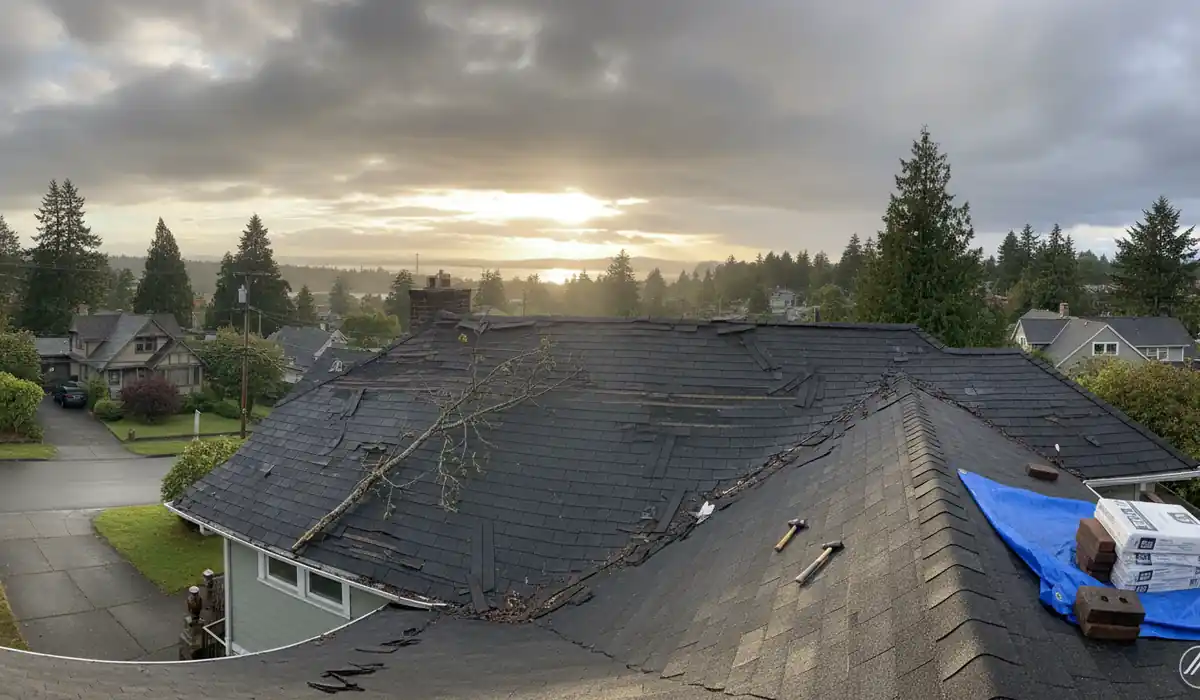
The hours right after a windstorm matter — what you do first affects both your home’s safety and how well a potential insurance claim goes later. Here’s the right order.
First: check for immediate hazards
Before anything else, look for downed power lines near the house, obvious structural sagging, or large debris still precariously lodged on the roof. If any of these are present, stay clear and call emergency services or the utility company before doing anything else — no roof damage is worth a safety risk.
Second: document before you touch anything
Photograph the damage from multiple angles — close-up and from a distance, the whole roof plane, and any debris (a fallen limb, storm wreckage) that caused it — while everything is still in its post-storm state. Our guide on exactly what to photograph for an adjuster covers this in more detail, but the core rule is simple: document first, clean up second.
Third: stop active water intrusion
If water is actively coming into the house, temporary tarping over the damaged area is the priority — it’s a stopgap, not a repair, but it limits how much interior damage accumulates while you arrange a permanent fix. Tacoma’s windstorm season (roughly November through February) often brings the next system through within days, so a temporary tarp genuinely buys time rather than being optional.
Fourth: get a professional inspection
A roofing contractor’s inspection tells you what’s actually damaged versus what looks concerning from the ground but isn’t structural — and it produces documentation you can use whether or not you end up filing an insurance claim. This is also when repair-vs-replace gets a real answer instead of a guess.
Why Tacoma sees this kind of event
Tacoma sits directly on open Puget Sound water at Commencement Bay and near the Tacoma Narrows — the same channel whose wind famously tore apart the original 1940 Narrows Bridge. That real, direct water exposure means windstorm-driven roof damage is a recurring seasonal event here, not a freak occurrence, which is exactly why having a clear first-steps process matters.
Fifth: decide on the insurance claim
Once you have documentation and a professional assessment, you’re in a much stronger position to file a claim if the damage looks storm-related rather than pre-existing wear. Our guide on telling storm damage from pre-existing wear walks through that specific distinction.
Bottom line
Safety first, documentation before cleanup, a tarp if water’s getting in, then a professional inspection — in that order. If your roof was just hit by a windstorm, call (253) 201-1336 and we’ll get out to assess and document the damage quickly.
The bottom line
If you want this priced for your own roof rather than in ranges, we come out and inspect at no charge across Tacoma and Pierce County. You get a written per-square price with tear-off and any deck repair broken out separately. Call (253) 201-1336.